
Nowhere to go: Chicago teens on ‘takeovers,’ curfews, and lost community spaces
A summer of viral gatherings, arrests and City Council debate has renewed old questions about race, public space and who gets to be young in public.
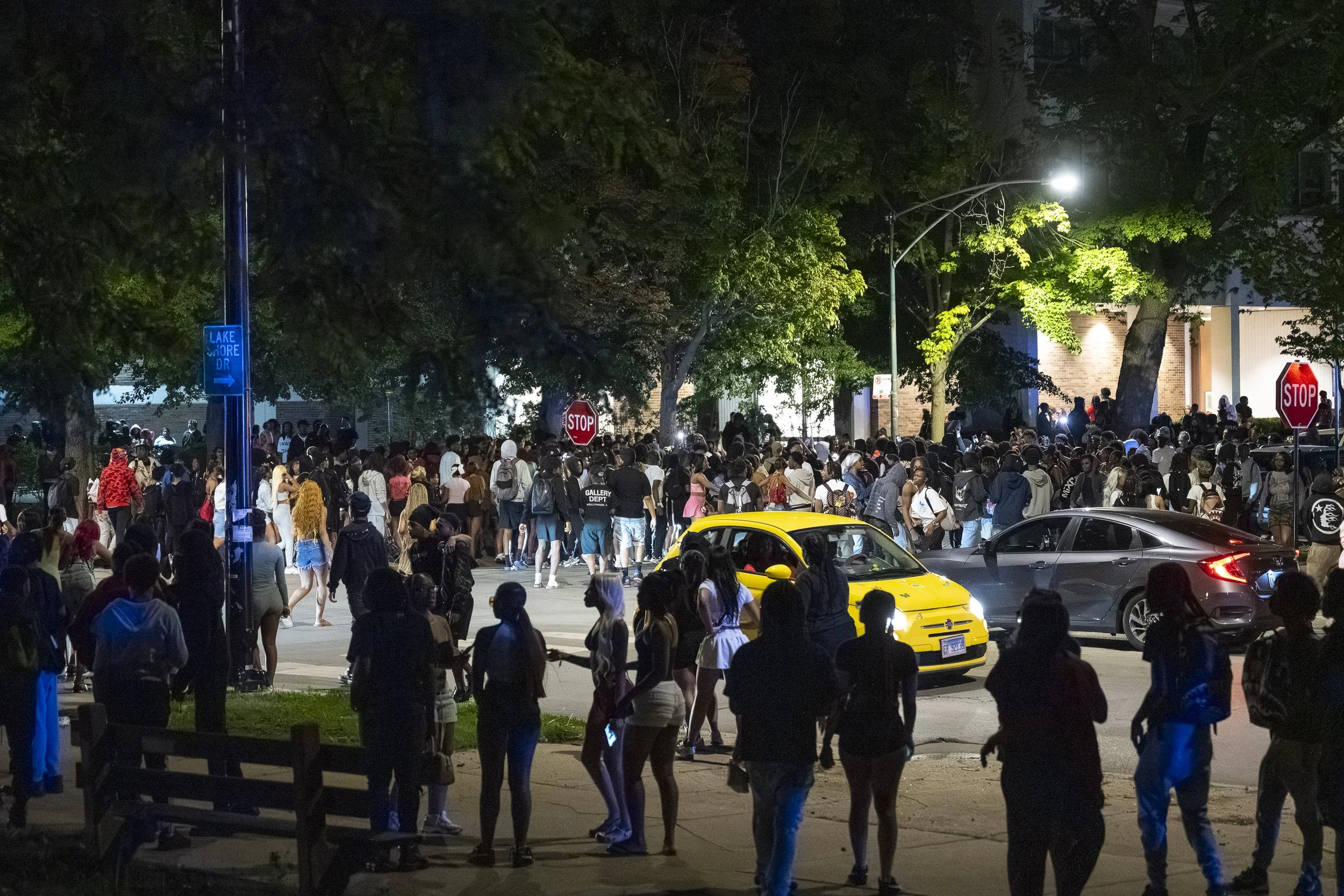
Hundreds of young people gathered in Hyde Park as Chicago police officers attempted to disperse them, during Memorial Day weekend. | Tyler Pasciak LaRiviere/Sun-Times
By Jonathan Torres
Dalila Nicholson, 16, scoffed at the notion that stricter curfews are the solution for “teen takeovers” — a relatively new term used to describe large gatherings of teens and young adults in public spaces, often coordinated on social media — and the turmoil that sometimes accompanies them.
“Stricter rules will make sneakier kids,” said Nicholson, who was hanging out with her friends at the 57th Street Beach in Hyde Park on the city’s South Side. “It’s not like anybody’s going to listen to it — they barely listen to it now.”
Nicholson, a student at South Shore International College Preparatory High School, shared her opinions on the Fourth of July weekend, which welcomed thousands of visitors to beaches and parks along the city’s lakeshore.
Just six weeks earlier, the area surrounding the 57th Street Beach also saw hundreds of young people gathering to dance and socialize on the wide expanse of sand and natural grass. But as the crowd grew larger, things took a turn — some people began fighting, others jumped onto cars and still others threw objects at police officers who arrived on the scene, according to media reports.
By the end of that night, the Chicago Police Department arrested 53 people — some charged with disorderly conduct for failing to obey an order to disperse; others with felony weapons charges and misdemeanor reckless conduct and obstruction. It served as a reminder that Chicago is squarely at the forefront of a national story about teen takeovers — also known as “teen trends” — which have led to local calls for stricter curfews for teens and fines for their parents, as well as a measure to hold social media platforms accountable.
But some researchers say the violence and turmoil associated with teen takeovers — attended by predominantly Black and Latino youth — are often blown out of proportion, pointing out that most youth gatherings are nonviolent.
“The label ‘teen takeover’ did not emerge from research; it emerged from a tradition of labeling teens of color as these threats before even examining what they’re actually involved in,” said Almethia Franklin, a Concordia University Chicago sociologist who has been studying youth gatherings.
For his part, Mayor Brandon Johnson said he’s been trying to ensure public safety while steering clear of the kinds of measures that end up criminalizing young people. Last year, he vetoed one curfew ordinance passed by the City Council and has instead worked to expand programs that give young people safer places to gather, including free YMCA memberships during the summer.
“You’ve got to make sure that young people know that they are loved and supported. The vast majority of our young people do what’s right,” Johnson told the Investigative Project for Race and Equity. “Of course, if they work outside the confines of the law, they’ll be held accountable. But you’re not going to be able to arrest your way out of this.”
—
The Investigative Project spent the past few weeks visiting South Side beaches to talk to teens and hear their opinions on what the adults are calling teen takeovers and the city officials’ response to them.
The teens — who grew up during the lockdowns of the COVID-19 pandemic — told us that youth gatherings provide them with a chance to socialize offline and blow off steam, and that city officials need to do more to provide alternative spaces for them to gather. Many teens also pointed to issues of equity when it comes to the availability of “third spaces” — gathering places outside of the home and work or school.
Ford City Mall, for example: Once a place to hang out for four generations of Chicagoans, it recently shuttered, leaving young people with one fewer place to visit on a Saturday afternoon. Navy Pier, due to recent crowding incidents, prohibits youth attendance unless accompanied by an adult. And the list goes on.
“Y’all are closing staples of the community — take Ford City Mall, for example,” said Caleb Stinson-White, 17, a student at Kenwood Academy High School. “That’s a place where young African Americans can go. They can shop. They can just have a sense of community. And we are running out of that. So what can we really do?”
Others said that places still available to them often have age restrictions, and that the economy is such that adults are now taking jobs once reserved for teens during the summer.
“You can’t even go to the mall no more without a parent. You can’t go to the movies no more — they’re asking for a parent and stuff like that,” said Ahmir Peterson, 16, a student at Kenwood Academy High School. “There used to be teen jobs, but those jobs are taken by adults. As a teenager, you are fighting against grown adults with real work experiences that have been working all their life. Everybody is fighting for a living. So it’s way harder.”
More from the newsroom:
Immigrants are finding success challenging detention in federal court
Illinois tax sales get an overhaul, but how much will homeowners benefit?
Still others said some teens do get a bit too rowdy when it comes to youth gatherings.
“I also feel like us, as youth, we need to do better because we had a lot of hangout spots, but (teen) trends ruined it,” said Taniyah Causay, a 17-year-old who lives in Chicago Lawn. “People don’t know how to act while they’re out in public.”
That’s a sentiment echoed by many who are struggling to understand the proliferation of teen takeovers while also trying to deal with the underlying currents of racism inherent in describing groups of youth of color as “unruly.”
It’s a deeply rooted pattern that has been taking place in Chicago for generations, said Adam Green, a University of Chicago associate professor in the departments of race, diaspora and indigeneity, and history.
“The presumption that there might be a problem with crime or there might be a problem with violence in the city usually kind of immediately moved to targeting Black and brown youth as the group that needed to be confronted, controlled, put in a situation in which it had to defer to authority,” said Green, who specializes in studying African American and urban histories.
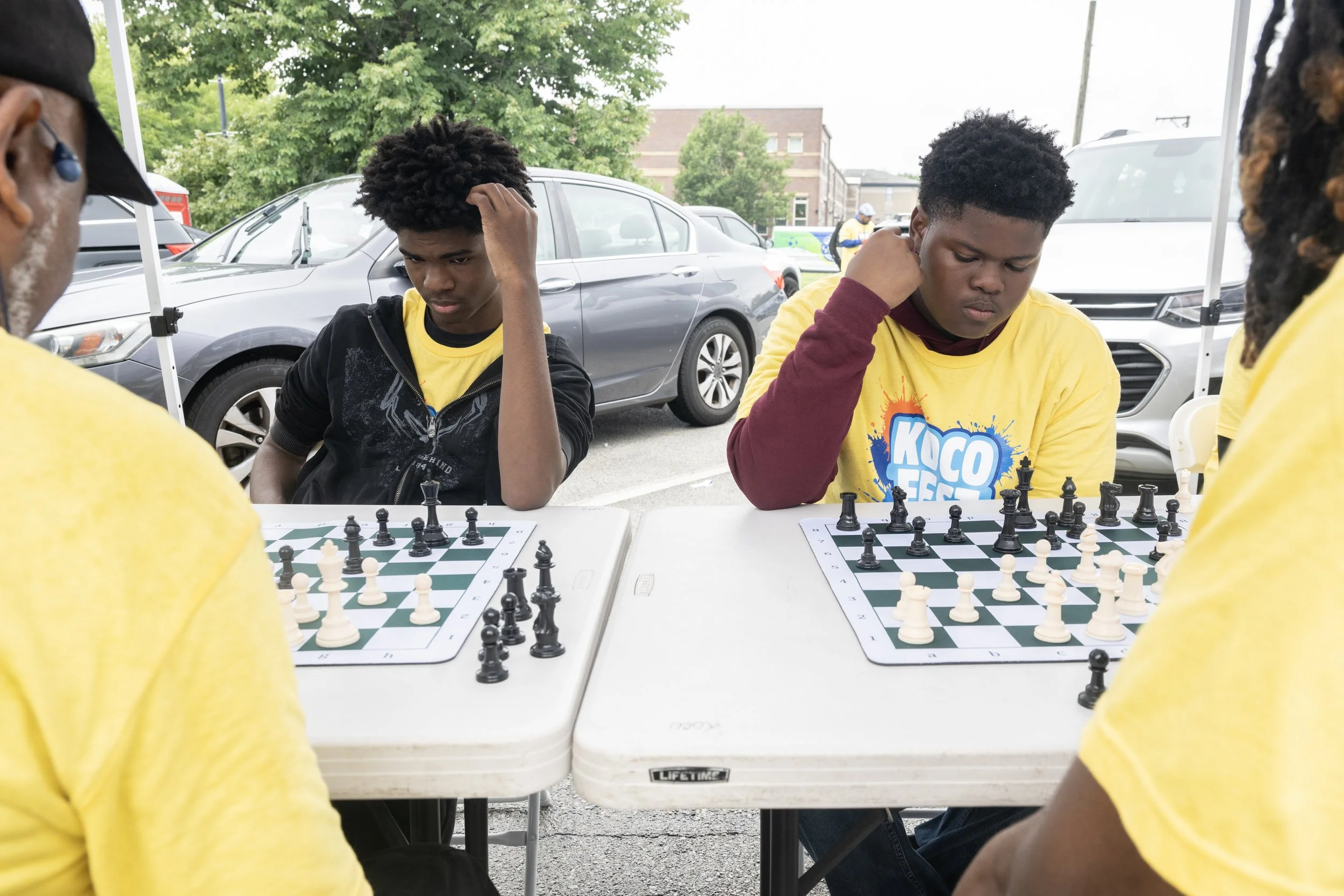
Young people got a few games of chess in during an event organized by Kenwood Oakland Community Organization on August 1. | Marc Monaghan for the Hyde Park Herald
Meanwhile, some youth organizers at Kenwood Oakland Community Organization said the decisions about youth development and investment should be led by young people, instead of adults deciding what teens truly want and need.
“When adults finally realize that they have to take a step back and let the young people take a step forward, then we’ll get more of those spaces that young people feel comfortable in,” Timara Wade, the group’s resource coordinator, said.
The Investigative Project filed Freedom of Information Act requests for police records on teen takeovers that have taken place in recent years. We are still waiting for the records and will follow up once they become available.
Jonathan Torres is a graduate of the Investigative Project on Race and Equity’s Apprenticeship Program. He is now working with the newsroom on a growing effort to blend shorter, community-minded narrative storytelling with the Investigative Project’s long history of data-driven investigative reporting.
Reach Jonathan and the entire newsroom at tips at raceandequityproject dot org .
—
Here’s what else the teens had to say:
Do you think teens like you have enough welcoming places in public — places where you can hang out with friends or meet new people?
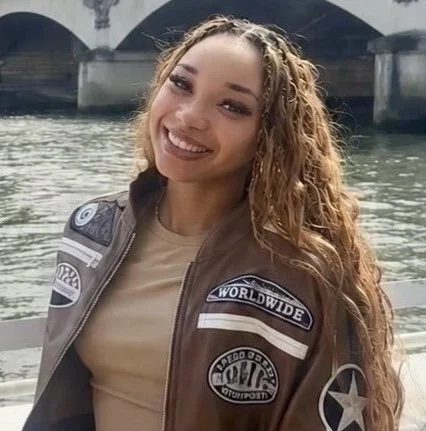
“I think the city is so tailored to tourists and stuff, and it kind of forgets about the community — especially the children — because we don’t really have nowhere to go except for public places like the beach.”
La’Niya Cobbins, 18, Englewood, a recent graduate of Marie Sklodowska Curie Metropolitan High School | Photo by Jonathan Torres
Kendall Adams, 16, Chatham, student at De La Salle Institute
I feel we don’t have places to go to because of how the community is now with teen takeovers and all of that. I just feel it’s not appropriate that we should always have adults with us. I just want something fun like a big pool or a big arcade or like a big amusement park — something big and fun that’s not far in the suburbs.
What’s your take on teen takeovers/trends? Is it hyped up? If so, what do people get wrong about them?
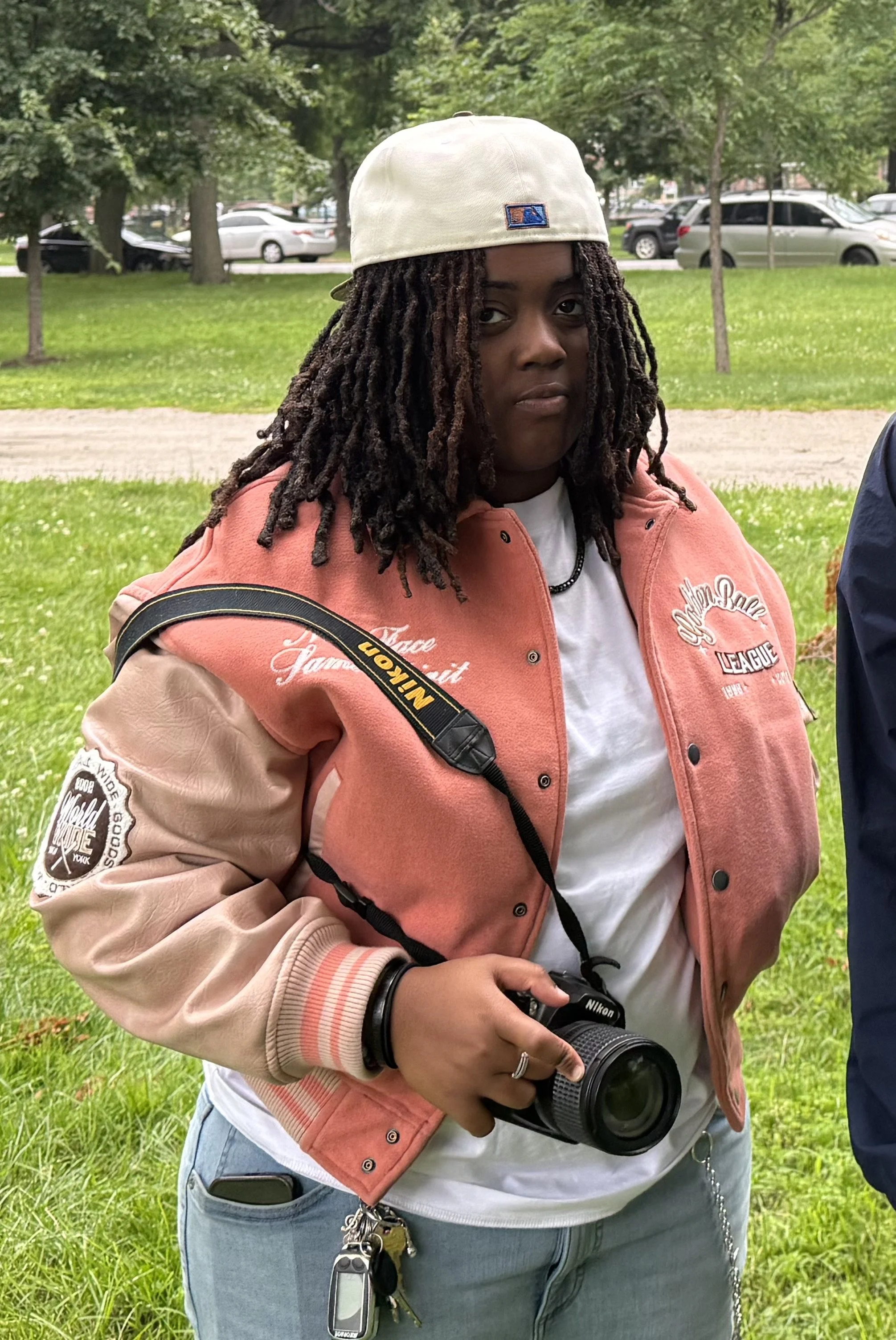
“As soon as you say teen takeover, they expect the worst. Or teen anything. We know how to act civil, but it’s like we’ve been provoked to act a certain way because you’re already expecting it.
You can’t even walk down the street without somebody expecting negativity. So what do you expect? You already expecting us to do it, so they’re just going to give you what you’re looking for. Even if we don’t do it, it’s the same consequence.”
Javia Smith, 19, Riverdale, DJ/music engineer | Photo by Jonathan Torres
Naomi Taylor, 15, South Shore, student at Kenwood Academy High School
I feel like what people are getting wrong about us getting together is that (they think) we are going to get together and start some problems — when really we are just coming together just to hang out as teens.
Dalila Nicholson, 16, Greater Grand Crossing, student at South Shore International College Preparatory High School
I’ve been to a few (gatherings) and honestly, they’re fun — it’s teens coming together, and you meet new people. It’s fun until they start fighting and shooting and all that.
Jakoby Smith, 15, Lansing, student at Thornton Fractional South High School
I have been to (gatherings) where it didn’t have a bad outcome, but that’s because stuff happened. The police come, and they try to shut it down when there’s really nothing wrong with what’s going on. It might seem like something, but we just having fun.
Just because it looks like something going bad doesn’t mean it’s going bad. Just because you see five boys standing around in a big crowd, it doesn’t mean they’re going to fight. Like me and my friends — we would be in public, we’d be arguing over the dumbest stuff, but that’s just boys. We all know not to take it too far, but some people think otherwise.
Caleb Stinson-White, 17, Auburn Gresham, student at Kenwood Academy High School
It’s a big need in our generation for community and it’s something that we don’t have. So just trying to find a safe place for teenagers — that’s really what it’s about. One of the side effects is the damage to property, the affiliated people coming out, drugs, the alcohol. That’s all just a side effect of not having community.
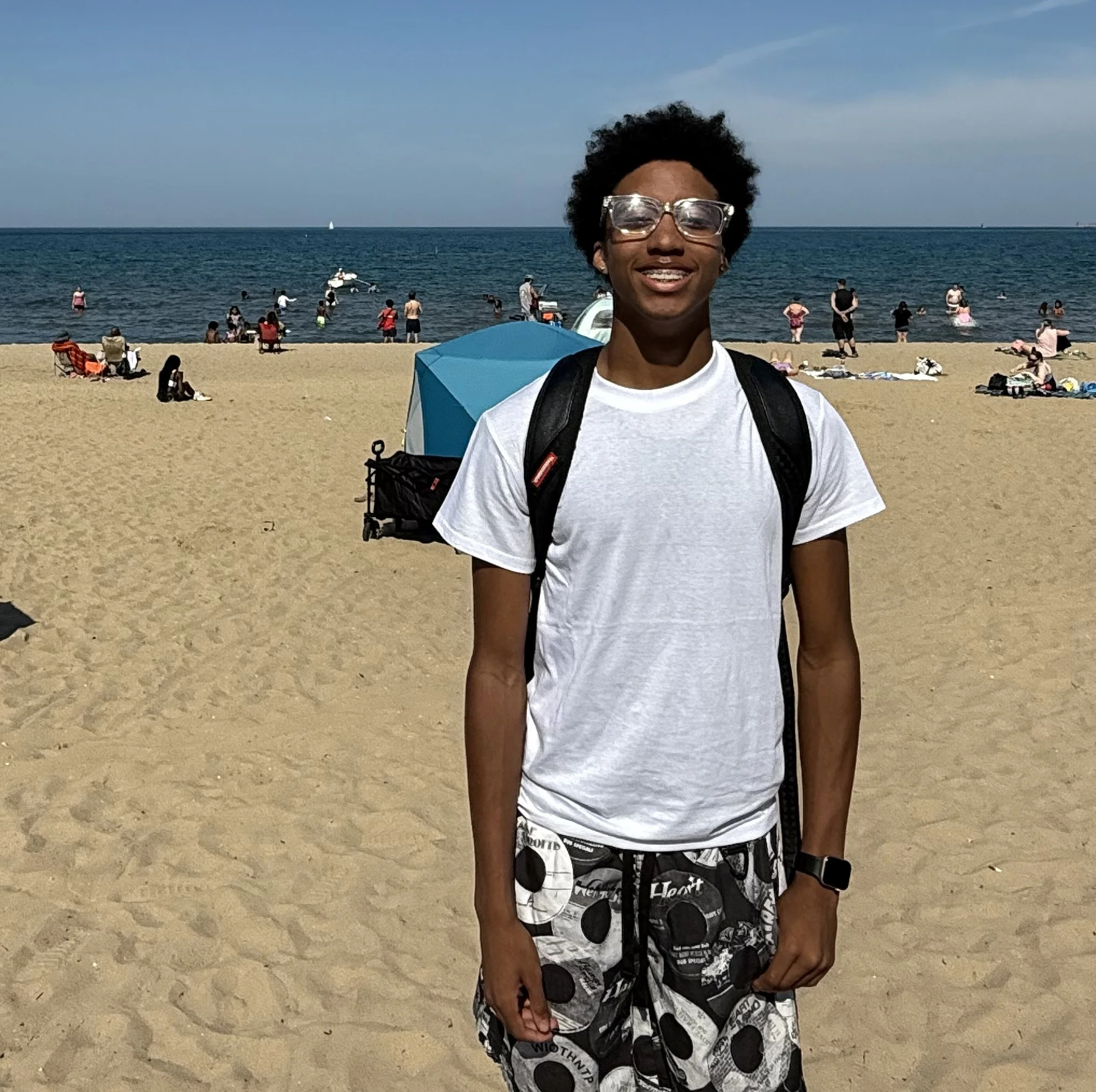
“Sometimes, it’s not even a teen takeover. They just label a bunch of kids that get together — and they don’t cause any problems — and they label it as a teen takeover just because they want to go outside and have fun.”
Ahmir Peterson, 16, Woodlawn, student at Kenwood Academy High School | Photo by Jonathan Torres
La’Niya Cobbins
I’m not the type of person to participate in (teen) trends just because of how dangerous it is. A lot of children are reckless, and I just don’t like to be around that.
But also I do see it as a way just to get outside and hang around and just have a good time. People used to do it back in the day — it’s just so much more dangerous now. So I think if we could do it in a safer way and still have the same impact, it would be a big difference.
Have you encountered the police while you were out with friends in public places? If so, how did it go? Did it make you feel safer?
Naomi Taylor
They do come off aggressive in my opinion. I remember one time I was at a teen takeover and I walked onto the street. I guess they had it closed off, and (an officer) put his hands on me and he pushed me off the street. I was like, ‘You could have said just get out the street. I would have gotten out of the street.’ You putting your hands on me is not going to resolve the case.
Dalila Nicholson
I feel like they come too aggressive. Sometimes they’ll just come aggressive, and there will literally be nothing happening, and it’s kind of irritating.
Jakoby Smith
They see a crowd and they feel like something is going wrong.
They should come off in a cooler way or at least try to interact before they think it’s a problem. If you interact with them, the kids are going to let you know based off how they are acting. If you talk to them, you’re going to know by their body language if it’s going bad or not.
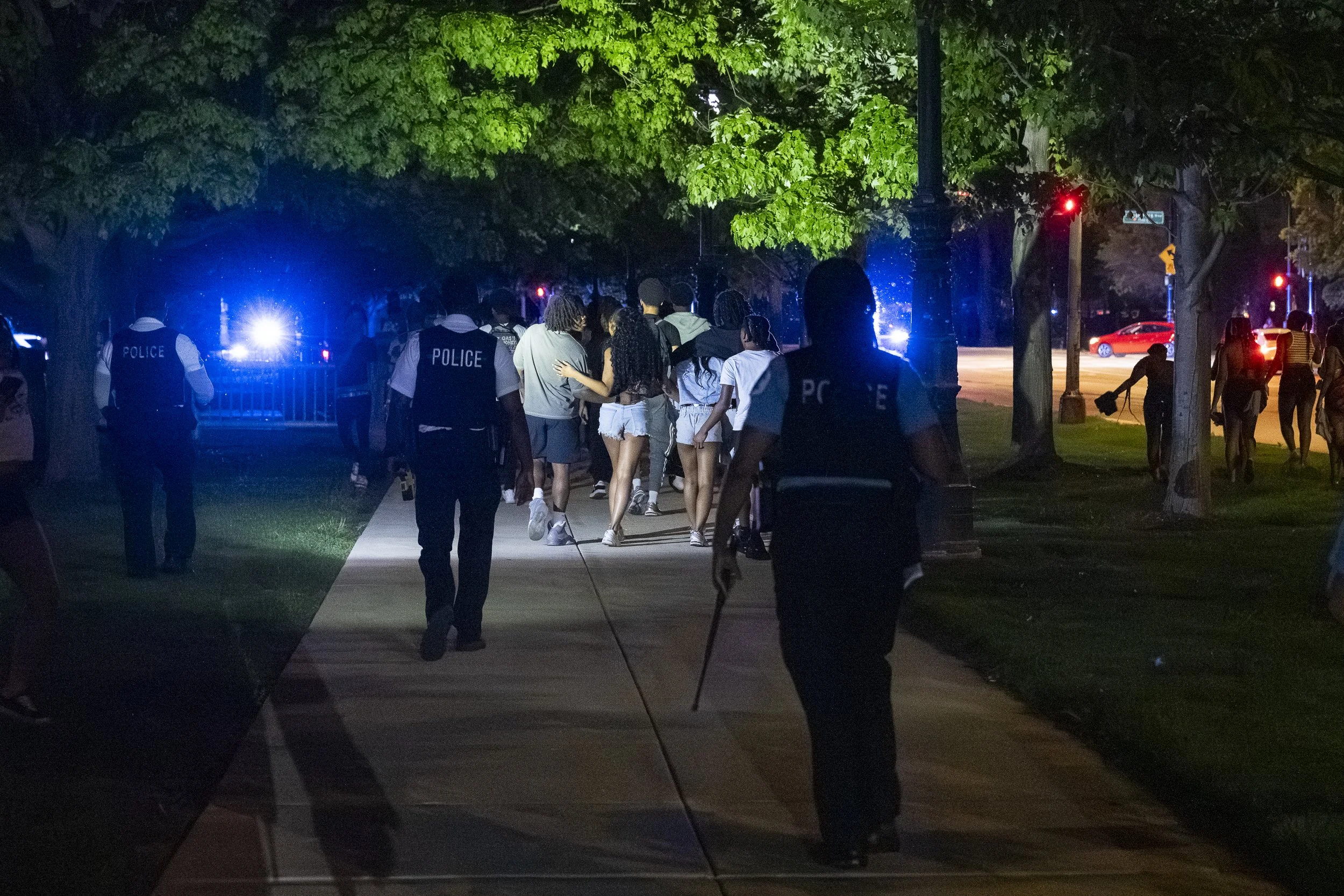
Dozens of peolpe were arrested at a youth gathering in Hyde Park during Memorial Day weekend. | Tyler Pasciak LaRiviere/Sun-Times
Kendall Adams
I’m not going to lie — they be overly disrespectful. The police had my friend crying over here, scared and shaking for her life. I just feel like they’re disrespectful when it comes to it.
When you’re being disrespectful to (teens), they’re not going to show no respect back. So you need to learn how to be respectful when it comes to them.
Caleb Stinson-White
They call any gathering or group of Black individuals intimidating or scary. That’s something that goes back years within history. A group of Black individuals is always seen as a threat or a danger to people who aren’t of the community.
City officials have been considering stricter curfews and other restrictive measures in response to teen takeovers. What do you think about them?
La’Niya Cobbins
I could see in a way how it could help because it would stop the negative activity and the violence, but also it does put a restriction on us to the things that we’re allowed to do.
Naomi Taylor
At this point, with the more restrictions, we’re going to want to do more stuff. I’m not saying that’s a good thing. We got to control ourselves, but it’s also we’re teens — what can we all do?
Javia Smith
I feel like before giving a restriction, how about give someone something to do? There’s nowhere to go. You still ain’t given us nowhere to go, but you’re going to give us restriction and jail time.
Caleb Stinson-White
Curfew ain’t work since COVID. There were people still outside during COVID. They just need some people to be around, because you never know what’s going on in everybody’s household. So just telling a group of people that yearn for a sense of community and just to be around people — that’s not going to work.