
Debt relief, health gaps, and Chicago’s first racial equity report
“When we have an equitable community, and one that values equity, I think everybody wins,” says one supporter.
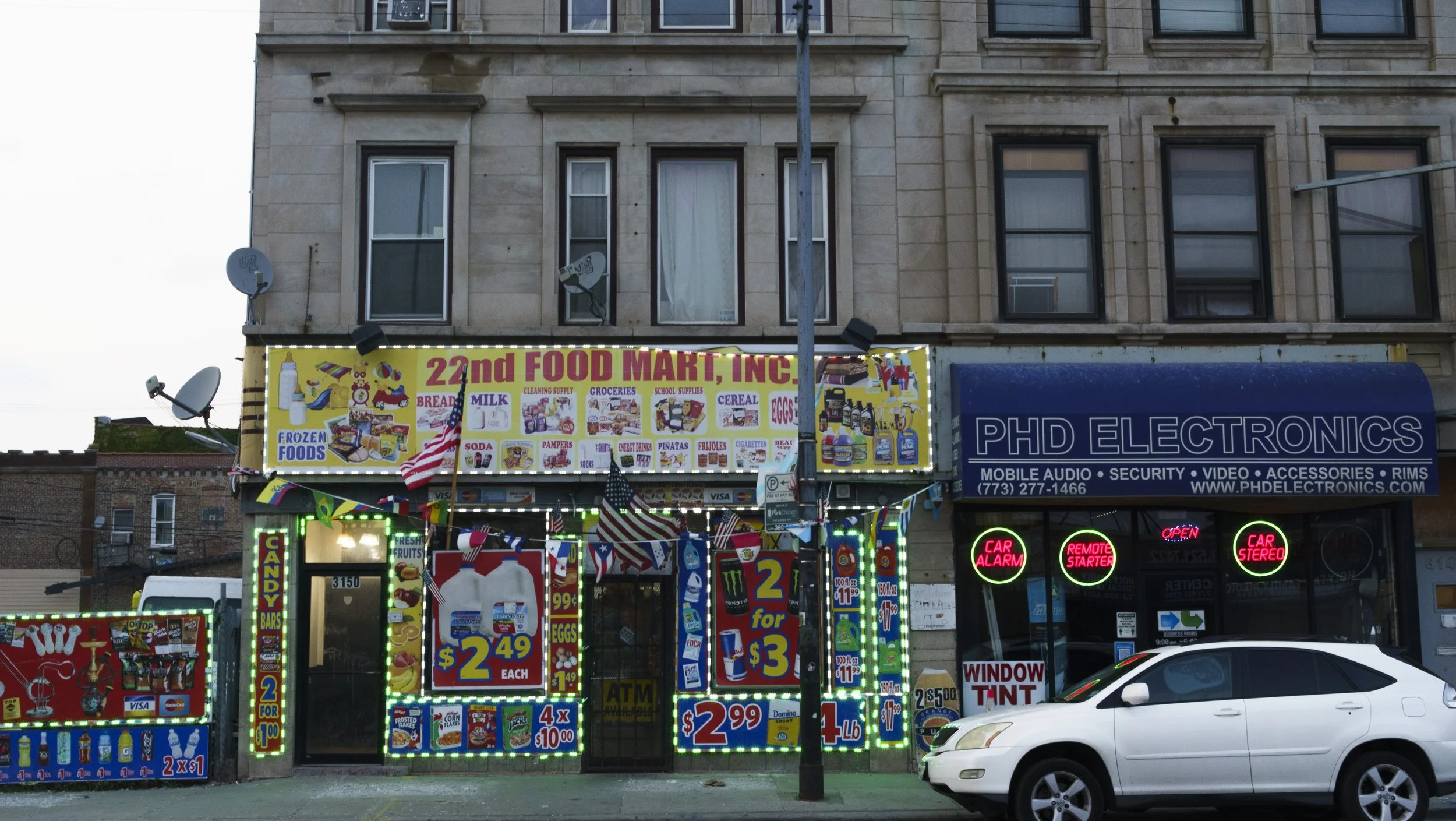
A view of a neighborhood food market in Little Village, Chicago. In many under-resourced neighborhoods, corner stores are often one of the few accessible sources of food for local residents. | Carlos Javier Ortiz
By Aydali Campa and Emeline Posner
The City of Chicago recently released a first-of-its-kind impact report reviewing multiyear efforts to advance racial equity across nearly 30 municipal departments from streets and sanitation to housing and public libraries.
The city’s “Racial Equity Impact” report highlights major steps that municipal departments have taken over the past four years to change or improve services in disinvested communities, and tracks their results to date. One civic leader who reviewed the findings called it a good start.
“It’s important that we live in a city that emphasizes and prioritizes equity,” said Chicago Urban League President and CEO Karen Freeman-Wilson, who praised the comprehensiveness of the findings. “This report exemplifies that there are actions behind those words.”

City municipal code defines “equity” as “outcomes and processes that result in fair and just access to opportunity and resources that provide everyone the ability to thrive.”
The report itself details changes to systems. Some of those changes include creating additional reentry service centers, as well as a home grocery delivery program serving residents living with disabilities on the West Side. The report also underscored the importance of continuing investments in opioid overdose prevention efforts, an issue that has grown dramatically in some majority Black community areas.
More from the newsroom:
Five years after settlement, Chicago’s 911 system still lacks crucial data
Black, Latino teens bear brunt of Chicago curfew enforcement, data shows
New programs detailed in the report also include improving housing development and debt relief in neighborhoods where private development is scant and city-debts like unpaid utility bills and parking ticket fees run highest. The report shows that $110.4 million in city debt relief programs were directed back to households on the South and West Sides, where such debt is concentrated.
The report claims that various program improvements have helped to narrow the life expectancy gap between Black and non-Black residents by 1.2 years. The gap it aims to close has been wide for decades, with White Chicagoans living almost 10 years longer, on average, than Black Chicagoans, according to city health data published in 2023.
The Mayor’s Office of Equity and Racial Justice produced the 66-page analysis. The office, created in 2019 under former mayor Lori Lightfoot, is responsible for coordinating city departments’ participation in the Racial Equity Action Plans, or REAPs, and evaluating their annual progress. Annual plans are required under the city’s municipal code. This report is the first that looks at multiple years of departments’ actions and analyzes the initial impacts of those changes.
Lyric Griffin, the deputy chief equity officer for the city’s Office of Equity and Racial Justice, says the efforts are intentionally city-wide.
“We really wanted to make sure that equity was not the responsibility of one individual or one office,” he said. “If we were to truly understand the inequities we see across Chicago were systemic, then our solution would have to be systemic.”
Griffin says the cross-departmental focus on racial equity includes improving access to city services for people who need it most, and making equitable investments to improve quality of life.
“The commitments that are most successful were the ones that were built into existing structures — not new, not flashy,” said Griffin.
He pointed to the Department of Family and Support Services as an example, which identified a gap in service for reentry support and employment assistance for people who are formerly incarcerated who also live on the West Side. To help solve the problem, the department opened the city’s first West Side community reentry support center in 2023.
That new location was the city’s fifth, and collectively, the support centers engaged nearly 40,000 people between 2024 and 2025, according to the report. Earlier this year the city opened a sixth center providing women-focused reentry services in Pilsen.
Freeman-Wilson says she hopes the findings will resonate with Chicagoans across the city, whether they live in Lakeview or South Shore.
“When we have an equitable community, and one that values equity, I think everybody wins,” she said.
Tell Us What You See: Are the city’s racial equity programs making a real difference in your neighborhood — or falling short? Share your experience with our newsroom at info@raceandequityproject.org
Correction: An earlier version of this story incorrectly attributed a quote to Griffin Krueger, a spokesperson with the Mayor’s Office. The quote is from Lyric Griffin, the deputy chief equity officer for the city’s Office of Equity and Racial Justice.