
Black, Latino teens bear brunt of Chicago curfew enforcement, data shows
An analysis of police records shows stark racial disparities in youth curfew enforcement.
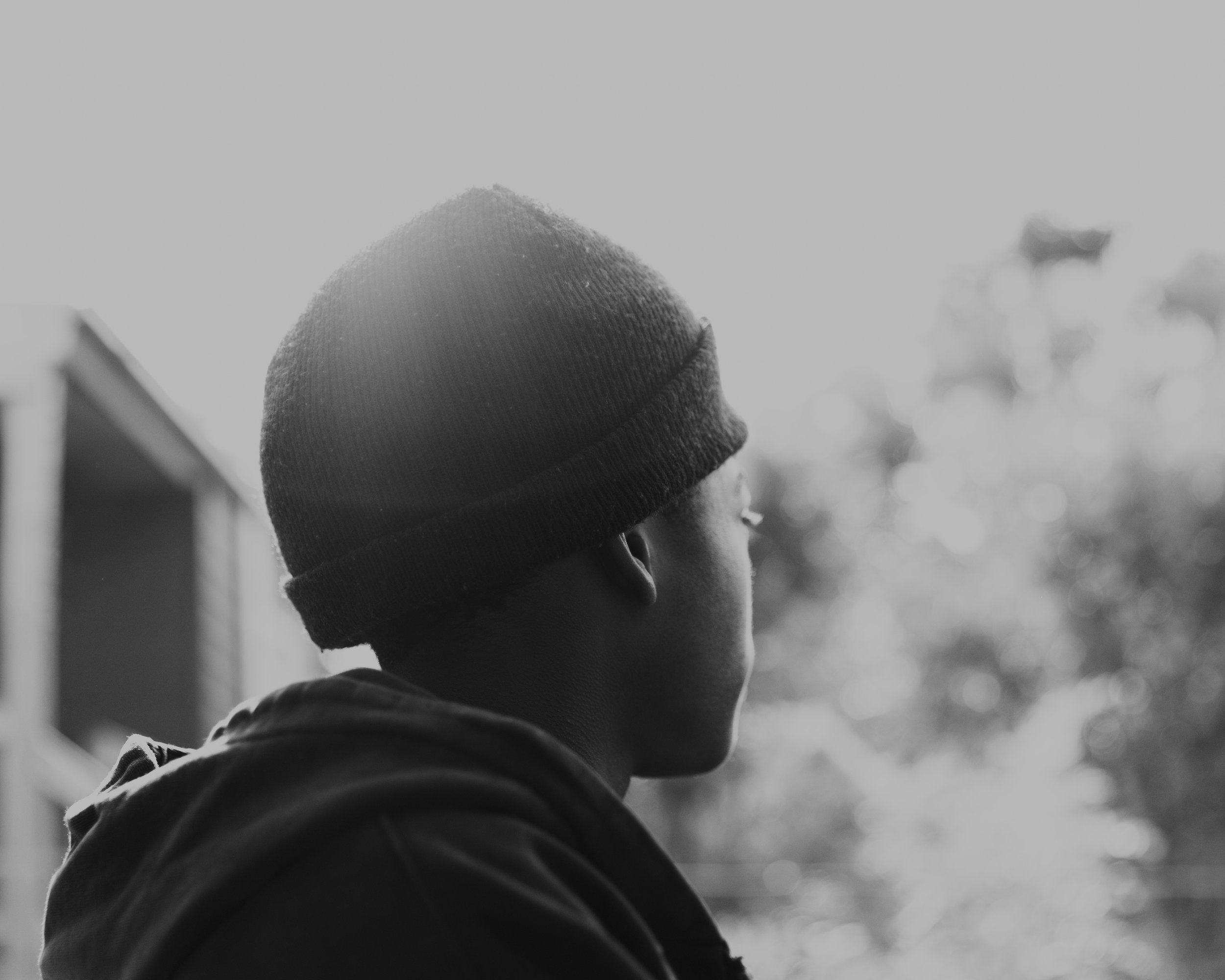
Gregory, 17, looks out from the back porch of his South Side home. He says in Chicago police officers stopped him for being out past the city’s curfew in 2024, when he was 15 years old. | Carlos Javier Ortiz/Investigative Project on Race and Equity
By Jonathan Torres
In June 2024, just after midnight, Gregory said he was walking to his local gas station for some late night snacks when Chicago police stopped him.
“I see them rolling behind me, slowing down,” Gregory recalled. “I’m already knowing what they on.”
Gregory, who was 15 years old at the time, says the store was just a short walk from his home on the far South Side. He says when the officers pulled up next to him, they asked if he had anything on him — which Gregory interpreted as a gun or other contraband. He said no and lifted up his shirt, he recalled in an interview with the Investigative Project on Race and Equity. He says the officers then asked his age and told him he was out past the city’s 10 p.m. curfew.
Gregory, who we are only identifying by his first name since he is a minor, is among hundreds of Black youth stopped in 2024 by Chicago police as a result of the city’s longstanding curfew, data shows. Gregory said the officers drove him back home, spoke with his mother and let him go with a warning.
Now 17, Gregory says the experience “annoyed” him. It was not his only encounter with police, and he said he knows other teens who have been stopped by officers for curfew. Although he understands the city’s reasoning for a youth curfew, he’s skeptical that curfews keep young people safe.
The year police stopped Gregory, Black youth accounted for more than six in 10 of the curfew violation reports filed by Chicago Police. In 2024, Census data showed that Black youth under the age of 18 made up almost a third of minors in the city.
“I get where they are coming from but that ain’t really helping nothing,” Gregory said.
Chicago’s youth curfew has existed for decades. In 2022, the city’s current curfew ordinance was expanded under former Mayor Lori Lightfoot following the fatal shooting of a teenager downtown. The decision drew criticism, with advocates and alderpeople questioning whether such policies actually make young people safer.

Officers in the Chicago Police Department logged more than 3,600 curfew violation reports between 2020 and September 2026, according to records obtained by the Investigative Project. The reports show a stark racial disparity in who gets picked up for breaking curfew: Nearly two-thirds of the reports involve Black youth, about a quarter involved Hispanic youth, and less than 10 percent are White youth. Just over half of the reports were for 15- and 16-year-olds.
The police department requires officers to file a report for each minor they take into custody for violating the city’s curfew. These reports do not mean that officers made an arrest or issued a citation. Officers may take the minors back home or bring them to a nearby police station where they are released to a parent or guardian.
CPD did not respond to a request for comment about our findings.
Although the number of curfew violation reports have fallen by nearly a quarter in recent years, Black teenagers continue to account for the majority of youth documented in the reports.
“I don’t walk at night no more,” Gregory said. “If I do need something, I most likely go get it early in the morning, just be stocked up so I don’t have to go back outside.”
Where curfews are enforced
Since 2020, more than one-third of curfew violation reports were concentrated in just four police districts. Each recorded more than 300 reports.
These districts include the 6th, which includes Auburn Gresham and Chatham on the South Side; the 1st, which includes the Loop and South Loop; the 25th, which includes Belmont Cragin and parts of Austin on the Northwest side; and the 2nd, which includes parts of Bronzeville and Hyde Park on the South Side.
Police in the 6th district, which also includes parts of Roseland and Greater Grand Crossing, recorded the most with 375 reports.
On the South Side, a police beat covering part of northern Roseland and a small portion of Chatham — both predominantly Black communities — recorded 72 curfew violation reports since 2020, one of the highest in the city. By comparison, another beat covering the majority White neighborhood of Mount Greenwood, also on the South Side, along with West Beverly, recorded just 27, despite covering about five times as much land.
Downtown also stood out. Police issued 97 curfew violation reports in the Loop near Millennium Park. Nearly half of them came from just three dates, which included large youth gatherings.

Although our analysis found that most curfew reports resulted in a young person being released to a parent or guardian, the penalties can be more serious.
This includes a fine of up to $500, community service, or both. If a person breaks the city’s curfew three times within a 12-month period, they can face a fine of up to $1,500.
Researchers like Eve Rips say experiences with police can negatively affect young people, even if they aren’t arrested.
“It can cause labeling effects for children who start to think of themselves potentially as the sort of people that get involved in the justice system,” said Rips, an assistant professor at the University of Illinois Chicago School of Law.
She also questioned whether curfews even improve public safety.
“If safety is our goal, I would really want to see research showing that curfew laws have had an impact on safety,” said Rips. “To my knowledge, there’s not compelling research out there”
Chicago advocates, youth weigh in
Youth advocates say the city’s curfew enforcement alone may not address why some young people are out late. They told the Investigative Project that many of the teenagers they work with often need more support after the school day ends.
Keyuntae Dent, lead youth development coordinator at UCAN, a nonprofit focused on youth development and outreach, says he keeps his phone line open for late-night calls from the young people he works with on the West and South sides. He says those calls come regularly.
“I always got an open line,” Dent said. “I got a youth that’ll call me maybe 10 p.m. at night if he is trying to get an Uber home, if he feels like he’s stuck somewhere or if he just needs to talk.”
Dent said expanding free programs and safe spaces where teenagers can spend time would provide them more supportive and safer options.
The city has invested in efforts to expand opportunities and safe spaces for youth, including free YMCA memberships for teens this past summer. But Dent said he wants to see more programming year-round.
Some teens from the Chatham neighborhood on the South Side told the Investigative Project in a recent interview that they question whether a curfew would even address how to keep youth safe.
Malia is a teenage member of a youth advisory board with Acclivus, a community health organization focused on violence prevention. The Investigative Project is identifying her by first name only since she is a minor.
When an Investigative Project reporter shared with her and other advisory members that their neighborhood has some of the highest curfew violation reports out of the entire city, they weren’t surprised. They pointed to limited places for teens to hangout in their community, as well adults suspicious of what they’re up to.
“What do you expect teens to do?” Malia said. “There's nothing around there to do.”
Other young people said that keeping youth safe should also involve changing the way police interact with them.
Jahmar Brown, 19, works with teens directly through the youth development organization Alternatives, Inc. He said police officers should be viewed as someone youth can turn to for help, even if it is just for a ride home.
“I should be able to call the protectors of the neighborhood to be able to take me home or help me out.” Brown said, later adding, “I feel like they can be more as protectors instead of trying to lay down the law.”
Do youth curfews curb crime?
Research studies looking at how effective youth curfews are have not shown that they consistently reduce crime.
In 2024, the U.S. Department of Justice’s Office of Juvenile Justice and Delinquency Prevention published an extensive literature review looking at decades of studies conducted on youth curfews. The review found that there were mixed results, with some studies showing reductions in certain youth crimes while others found that the curfews had no significant impact.
The federal review also noted that much of the research dated back to the late 1990s and early 2000s. The review called for future studies to address gaps in what is known about curfews’ effectiveness, as well as examine the disparities in how they are implemented and enforced.
The review also highlighted racial disparities related to curfew enforcement. In 2020, nationally, Black youth were overrepresented in arrests involving curfew violations and loitering.
Chicago’s long curfew history
Chicago’s youth curfew has existed in some form or fashion for more than 100 years. The city amended its curfew ordinance in 1992 under former Chicago Mayor Richard M. Daley. The measure required minors between the ages of 12 to 16 to be off the streets by 10 p.m. Sunday through Thursday, and by 11 p.m. on Fridays and Saturdays.
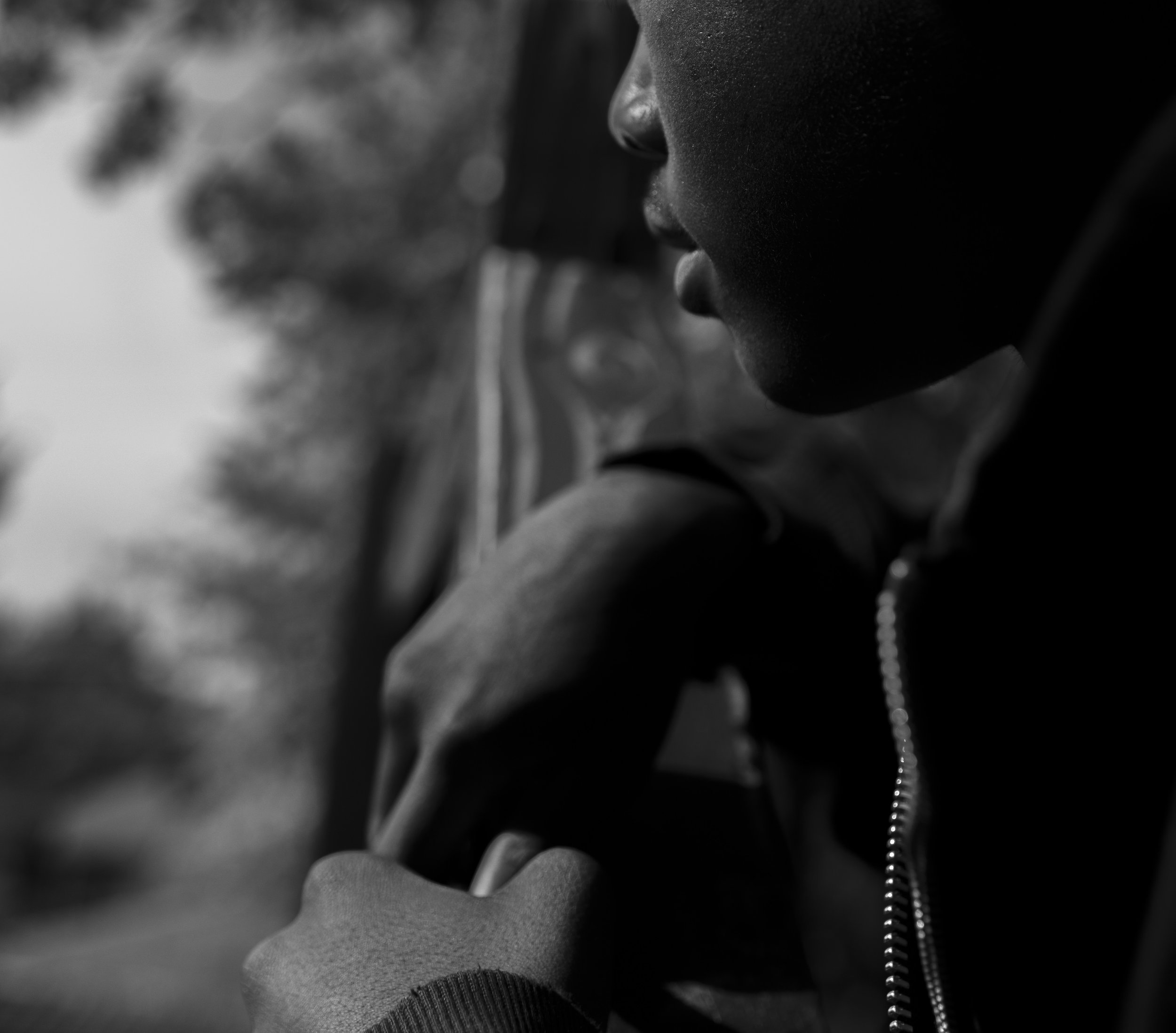
Gregory, who was stopped by police at age 15 for violating Chicago’s curfew, says he doubts the ordinance keeps young people safe. | Carlos Javier Ortiz/Investigative Project on Race and Equity
However, after 16-year-old Seandell Holliday was shot and killed downtown in 2022 near “the Bean” in Millennium Park, then-mayor Lori Lightfoot expanded the curfew.
Less than two weeks after Holliday was killed, Chicago city council voted to expand the age of teenagers to include 17-year-olds and to make the 10 p.m. curfew apply seven days a week. City officials enacted these changes despite being unable to provide evidence that the changes would reduce crime.
Youth and community advocates are still critical of the city's reliance on policing and punitive measures to address violence.
Alexander Perez, with the city’s Community Commission for Public Safety and Accountability, says the city should approach issues involving youth with grace and collaboration.
“We’re very reactive, we’re not very proactive,” Perez said, whose work focuses on community engagement and public safety in the 2nd District. “Instead of trying to throw more punitive measures at them, we need to actually put grace into action.”
Shelley Williams, the associate director of violence prevention at Breakthrough Urban Ministries, a West Side nonprofit that provides youth programming and other community services, has worked in community violence intervention for more than two decades. He said he has sometimes seen police treat Black and Brown youth differently than White youth.
“The engagement with law enforcement around groups of people of color versus groups of another persuasion are starkly different,” Williams said. “It’s more aggressive towards people of color.”
Craig Futterman, a clinical professor of law at the University of Chicago Law School who has focused on civil rights issues and police accountability, said the racial disparity in the city’s curfew violations reports was particularly concerning. He pointed to CPD's obligations under a federal consent decree to reform its policing practices and policies.
The consent decree, a federal court order that took effect in 2019, requires CPD to make reforms across the department, like provisions addressing police interactions with youth and impartial policing. Futterman said he viewed the large share of Black youth in curfew reports as inconsistent with what the decree is supposed to address.
“That's just deeply troubling and the exact opposite of what the civil rights consent decree is intended to accomplish," Futterman said.
He says although CPD has made some progress with its court-mandated reforms, there still remains a significant gap between written policy and what enforcement looks like in practice.
Jonathan Torres is a reporter with the Investigative Project on Race and Equity. Reach him at jonathan@raceandequityproject.org.